Why The U.S. Does Not Win Wars Anymore
Why the United States Does Not Win Wars Anymore
Through World War II, the United States had a remarkable string of military victories in major wars: Against Britain, Mexico, the Confederacy, Spain, and Germany. The price of victory was often enormous. In the Civil War alone, there were around 750,000 fatalities.
But if the costs of conflict were staggering, so were the benefits. Wars again Britain won and preserved U.S. independence. The Civil War saved the Union and emancipated the slaves. World War II ensured the survival of liberal democracy in Western Europe.
Then, following World War II, the U.S. stopped winning major wars, experiencing little except military frustration, stalemate, and loss.
Since 1945, in terms of victory in a major war, the United States is one for five. The Gulf War in 1991 is the only success story. This period features the three longest wars in American history: Afghanistan, Iraq, and Vietnam.
Yet it has not prevailed in a conflict, one might argue, since it invaded the Caribbean island nation of Grenada (population 91,000) in 1983, the invasion of Panama in 1989, the Gulf War of 1990 and 1991, and the bombing of Kosovo in 1999.
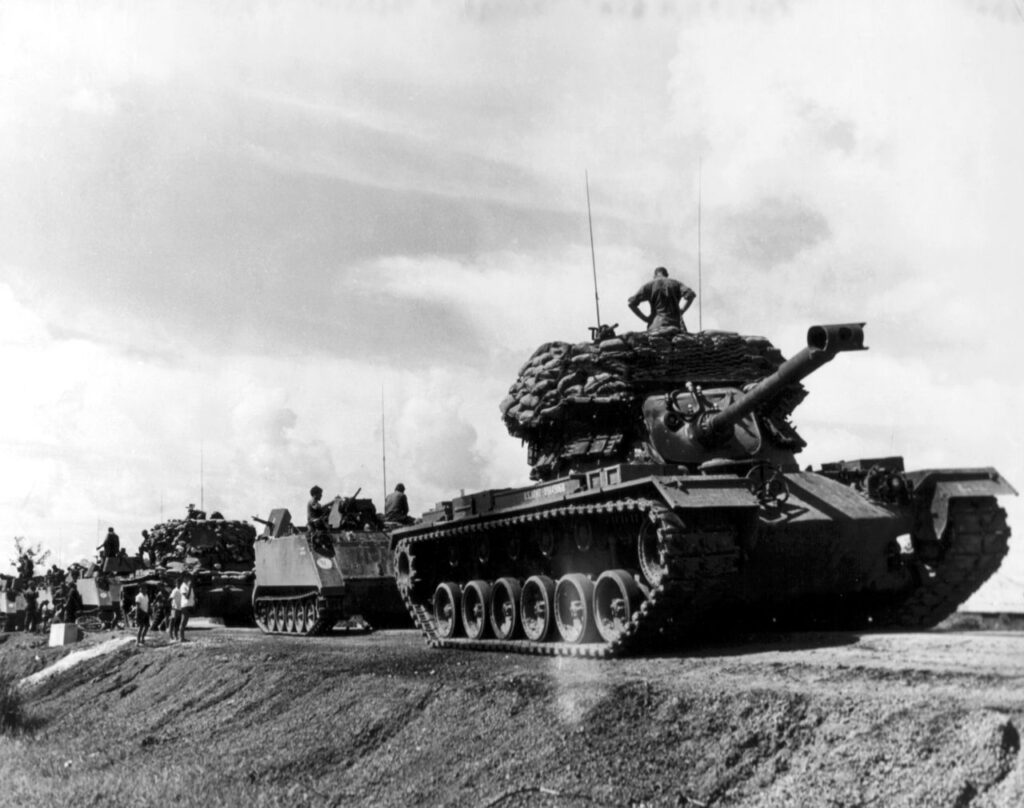
Since World War II, U.S. forces were defeated in Vietnam, fought to a draw in Korea, and became embroiled in seemingly endless conflicts in Afghanistan and Iraq.
Why has it become more difficult to win wars? It’s certainly not for lack of power. Today, the United States spends more on its military than China, Russia, Saudi Arabia, France, the United Kingdom, India, and Germany combined.
After adjusting for inflation, the United States spends about fifty percent more on the military this year than its average through the Cold War and Vietnam War. It will spend about as much as the next ten nations combined—three to five times as much as China, depending on how you count, and seven to nine times as much as Russia. The world as a whole spends about two percent of its total income on its militaries—the United States, about four percent.
Indeed, power is part of the reason the United States loses. After 1945, America’s newfound strength created a constant temptation to use force, and projected U.S. forces into distant conflicts.
Then, the nature of war changed in ways that made military campaigns ugly at best and unwinnable at worst. Only rarely do countries with big conventional armies invade one another. Most recent wars, in contrast, are civil wars. Between 1990 to 2005, there were 147 internal conflicts. Of those, only twenty — or fourteen percent—ended with one faction legitimately claiming victory. About twenty percent produced a ceasefire. And about fifty percent dragged on and on.
Many of these internal conflicts involve multiple warring parties, making it more difficult to reach a settlement. In addition, it has become easier to finance and wage war. Drugs, diamonds, and other resources can fund warring parties, while a flourishing arms trade has made advanced weaponry readily available.
The shift from conflicts between countries to conflicts within countries triggered an era of American military failure.
The United States waded into far-flung quarrels featuring culturally alien enemies, including North Korean, Chinese, and Vietnamese Communists, Afghan insurgents, and Iraqi guerrillas–handing the opponent home-field advantage. Americans often do not comprehend local geography, religions, traditions, ethnic politics, or languages. In 2006, there were 1,000 American officials in the Baghdad embassy, but just 33 spoke Arabic and only six were fluent.
Secondly, the advantages of having the greater military might have declined. In the early nineteenth century, stronger powers defeated weaker forces ninety percent of the time. From 1900 to 1949, that declined to 65 percent. And from 1950 to 1998, strong militaries fighting conventionally weaker forces achieved victory only 45 percent of the time.
Why? Often, it is because the weaker forces succeeded in sapping the stronger power’s will to fight, demonstrating a greater willingness to sustain casualties than the seemingly stronger military. For the United States, each war was but one of many priorities. These are not struggles for national survival.
But for our foes, the conflict was a life and death struggle. The U.S. may have had more firepower; but our enemies had more willpower. The United States was unwilling to pay the price of victory.
Further, the kind of violence that can defeat guerrillas can backfire. Indiscriminate violence can cause collateral damage, lose hearts and minds, and recruit more insurgents.
Another factor is the involvement of outside powers. These included the intervention of China during the Korean War, and Soviet and Chinese support for North Vietnam.
In addition, the goal of many recent wars—to overthrow an existing regime and replace it will a stable liberal democracy—has proven exceptionally difficult to achieve.
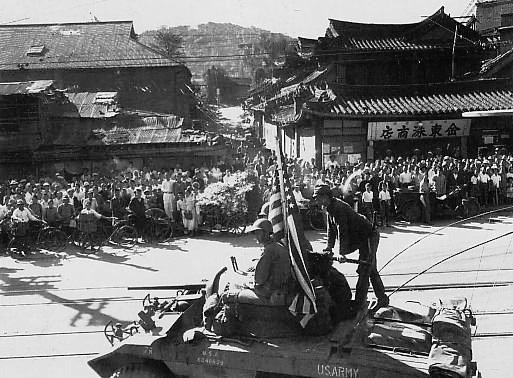
Even exiting a war has proven difficult. In Korea, the United States spent two years negotiating a truce, even as brutal fighting continued. In Vietnam, peace talks lasted for five years, with little to show for them. It took 21 days to capture Baghdad in 2003 and 3,174 days to leave. U.S. forces seized Kabul in November 2001 and are still there.
In 1951, General Douglas MacArthur said, “In war, there is no substitute for victory.”
But victory in war has become much more unattainable. Americans celebrate victory, but in reality, victory in war is often little more than wishful thinking, unhealthy braggadocio, and illusory triumphalism—good for the nation’s self-esteem, perhaps, but not good for handling reality.
Victory requires a clearly articulated and achievable goal, broad domestic and international support, the application of overwhelming military force, and a clearly defined end state that does not involve a lengthy commitment of U.S. forces in the aftermath of conflict.
Failure has most often occurred when the U.S. is engaged in a prolonged occupation of a country and seeks to engage in nation building. But failure has also occurred when the United States has intervened then walked away. In Libya, the result was a country ravaged by civil war.