The Holocaust
The Holocaust
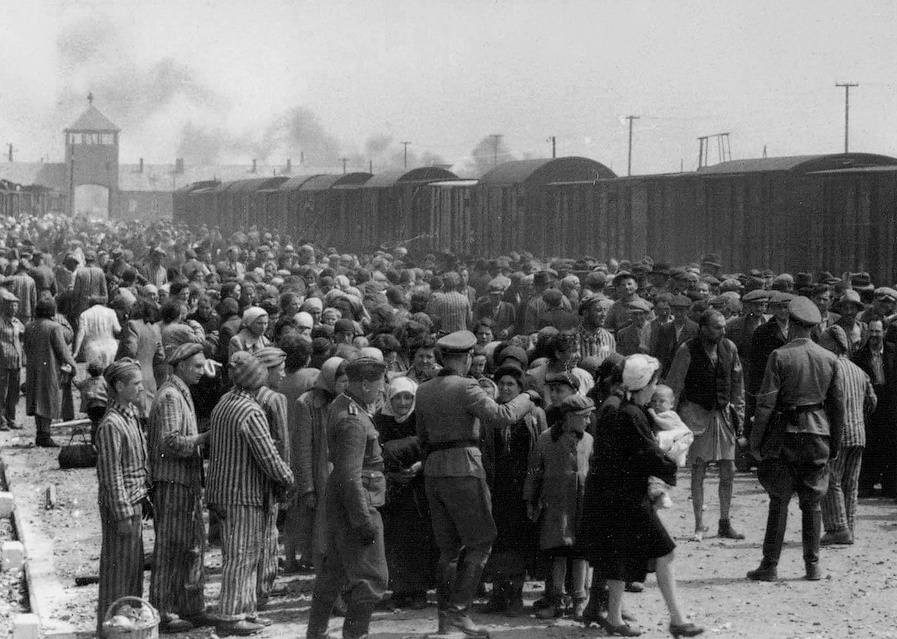
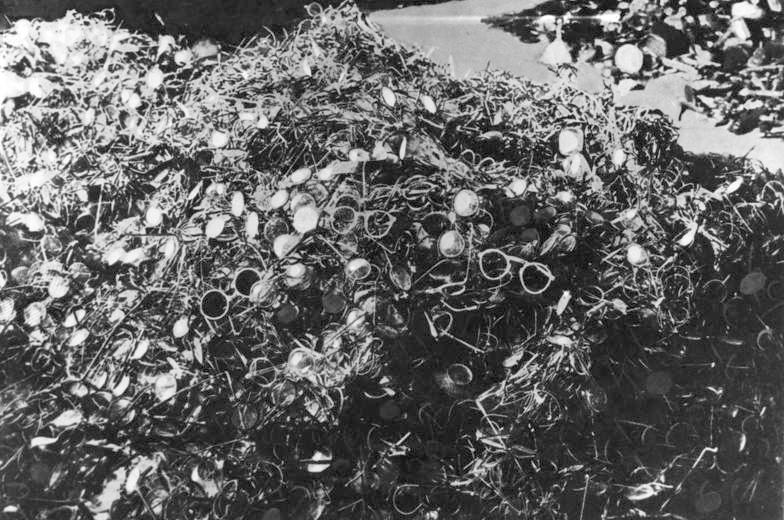
At 3 p.m., January 27, 1945, Russian troops of the 100th and 107th divisions entered Auschwitz, a village in southern Poland thirty miles west of Krakow. There, inside Auschwitz’s concentration camps, they found 7,600 inmates—including Otto Frank, the father of Anne Frank. The discovery of the concentration camps revealed World War II’s most terrible secret: the Holocaust. Two days later, the U.S. 7th Army liberated Dachau, another notorious Nazi death camp located outside of Munich. The liberators could scarcely believe what they saw: starving prisoners with bones protruding from their skin and serial numbers tattooed on their arms, stacks of half-burned corpses, and piles of human hair.
Auschwitz was one of six death camps that the Nazis operated in Eastern Europe between December 1941 and the end of 1944. The others were Chelmno, Belzek, Majdanek, Treblinka, and Sobibor,. But Auschwitz, where 1.6 million people died,.was the most infamous. Of Auschwitz’s victims, 1.3 million were Jews and 300,000 were Gypsies, Polish Catholics, and Russian prisoners of war. Altogether, people from 28 nations lost their lives there, including the disabled, homosexuals, political prisoners, and other deemed unfit to survive by Adolf Hitler’s Third Reich.
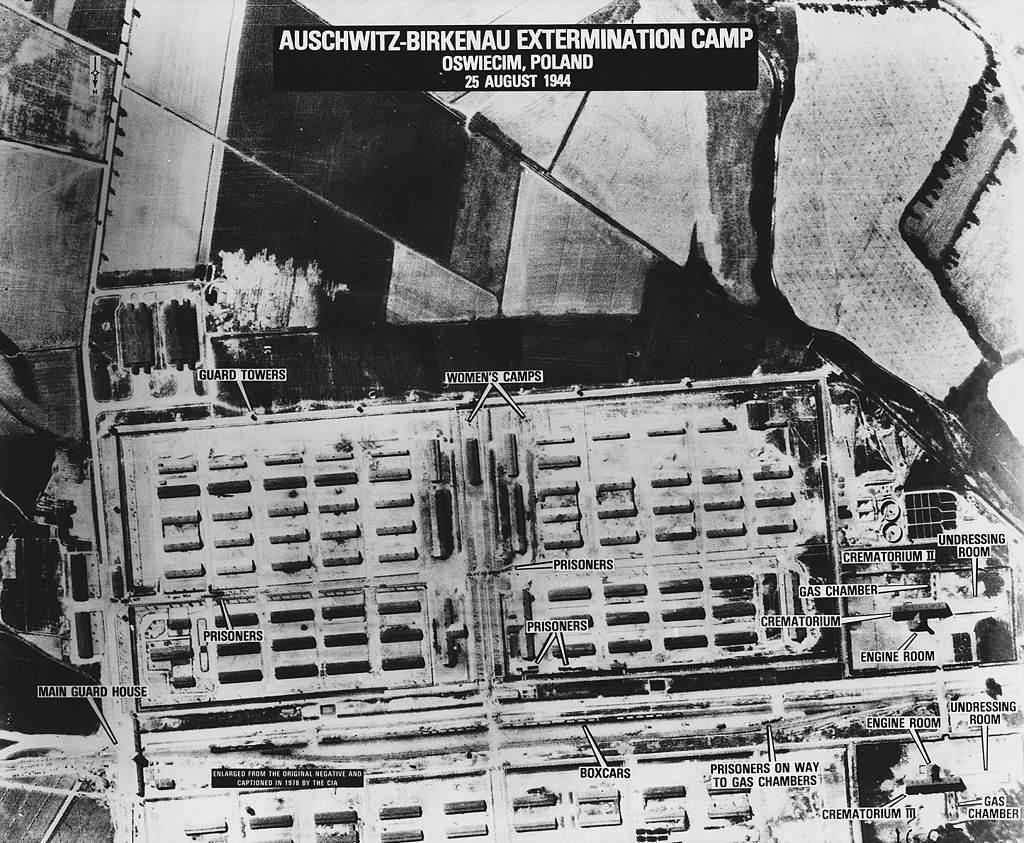
Auschwitz had two main areas. “Auschwitz I” contained a gas chamber and a crematorium and provided housing for prisoners used in slave labor and in Dr. Josef Mengele’s medical experimentation station (where one experiment involved seeing how long babies survived without food).
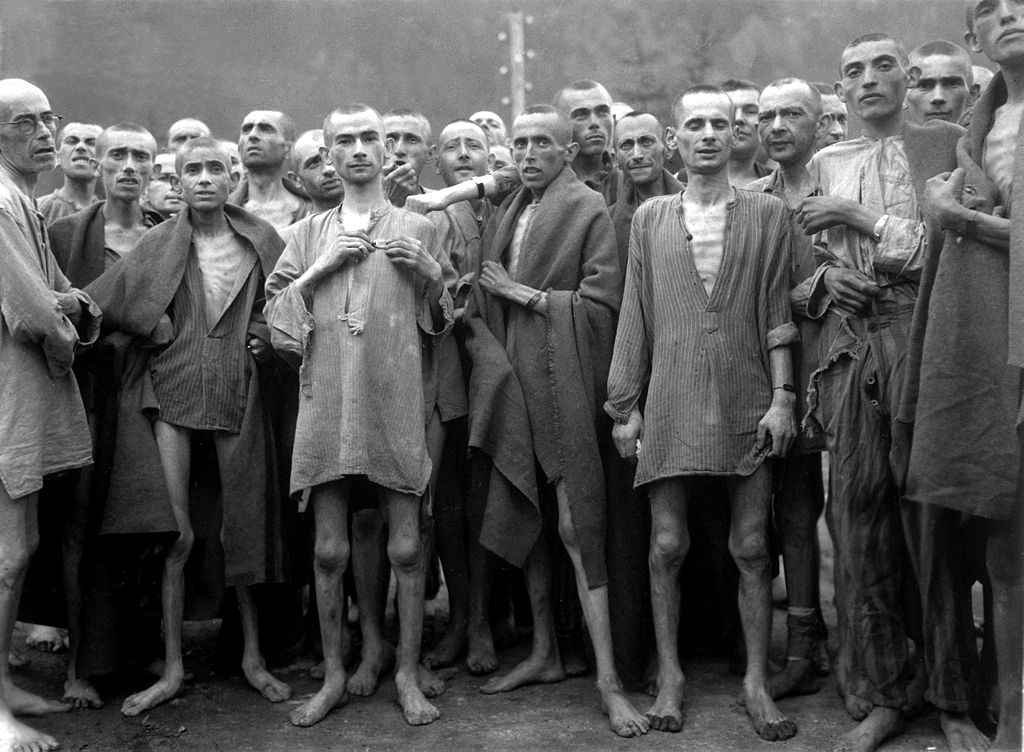
“Auschwitz II-Birkenau” contained four gas chambers and crematoria. It was here that cattle cars dumped their exhausted passengers. Prisoners entered through a gate inscribed with the infamous words “Work Will Make You Free.”
SS guards directed each new arrival to the left or to the right. The healthy and strong went to the right. The weak, the elderly, and the very young went up a ramp to the left—to the gas chambers, disguised as showers. Inmates were told that the showers were used to disinfect them, but they contained no plumbing, and the shower heads were fake. Guards injected Zyklon B through openings in the ceilings and walls, then cremated the bodies. The ashes were used as road filler and fertilizer or simply dumped into surrounding ponds and fields.
Auschwitz was a product of Adolf Hitler’s demented belief that Germans constituted a master race which had a right to kill those they deemed inferior. “Nature is cruel, therefore, we too may be cruel,” Hitler stated in 1934. “If I can send the flower of the German nation into the hell of war…then surely I have a right to remove millions of an inferior race that breeds like vermin!”
In 1941 and 1942, the Nazi fuehrer initiated the “Final Solution to the Jewish Problem.” The Nazis did their best to disguise their murderous scheme behind euphemisms and camouflage, but sometimes the truth slipped out. Heinrich Himmler, the official in charge of carrying out the final solution, explained to his top officers: “In public we will never speak of it. I am referring to the annihilation of the Jewish people. In our history, this is an unwritten and never-to-be written page of glory.”
In the spring of 1944, four prisoners escaped from Auschwitz, carrying tangible proof of the Nazi’s systematic program of mass murder. In mid-July, American and British leaders learned what was happening at Auschwitz, but they rejected pleas to bomb the gas chambers or the roads and rail lines leading to the camps. Military officials opposed the bombing because it would divert “considerable air support essential to the success of our forces now engaged in decisive operations.”
The Holocaust was a singular and unique event in human history. Never before had a sovereign state, with the cooperation of bureaucrats, industrialists, professionals, and civilians, sought systematically to exterminate an entire people. Yet many wonder whether Auschwitz’s terrible lesson has been learned.
Despite the establishment of Israel, improved Christian-Jewish relations, and heightened sensitivity to racism, many remain ignorant of the past. A 1995 opinion poll found that five percent of Americans deny that the Holocaust occurred and ten percent express doubts or ignorance. More than half a century after the liberation of Auschwitz, “ethnic cleansing” and the persecution of religious, racial, and ethnic groups continues in Bosnia, China, Guatemala, India, Sri Lanka, Tury, and elsewhere.
The United States and the Holocaust
The images are indelibly etched into our collective memory: slave laborers with protruding ribs, piles of hair, and bodies heaped like kindling. During World War II, Nazi Germany and its allies systematically exterminated approximately six million Jews. No more than 450,000 to 500,000 Jews survived World War II in German-occupied Europe.
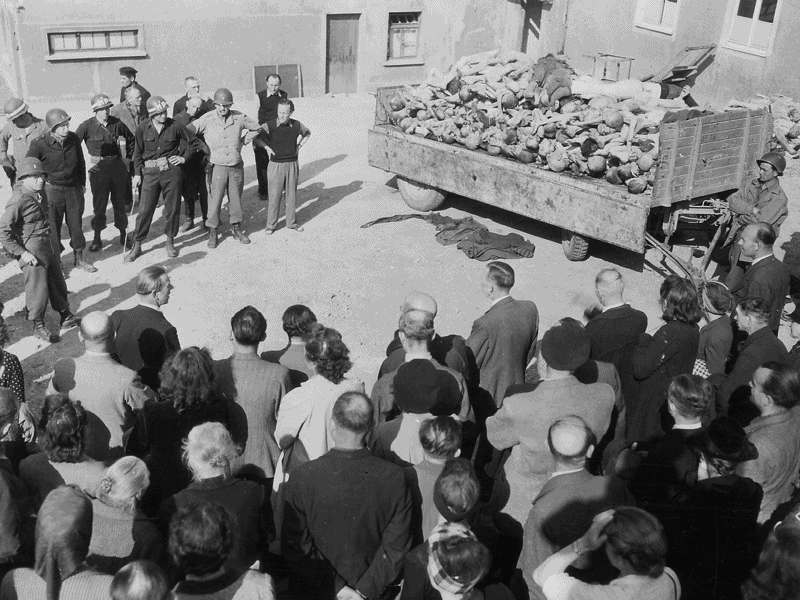
Despite efforts by retreating Nazis to destroy incriminating evidence, meticulous German records allow us to document the number of people killed. In 1943, Heinrich Himmler, a top Hitler aide, stated that, “We have the moral right…to destroy this people,” and called the extermination program “a glorious page in our history.”
As early as June 1942, word reached U.S. government officials that the Nazis were planning the annihilation of the European Jews. A report smuggled from Poland to London described in detail the killing centers at Chelmno and the use of gas vans, and it estimated that 700,000 people had already been killed.
Anti-Semitism fueled by the Depression and by demagogues, like the radio priest Charles Coughlin, influenced immigration policy. In 1939, pollsters found that 53 percent of those interviewed agreed with the statement “Jews are different and should be restricted.” Between 1933 and 1945, the United States took in only 132,000 Jewish refugees, only ten percent of the quota allowed by law.
Reflecting a nasty strain of anti-Semitism, Congress in 1939 refused to raise immigration quotas to admit 20,000 Jewish children fleeing Nazi oppression. As the wife of the U.S. Commissioner of Immigration remarked at a cocktail party, “20,000 children would all too soon grow up to be 20,000 ugly adults.” Instead of relaxing immigration quotas, American officials worked in vain to persuade Latin American countries and Great Britain to admit Jewish refugees.
In January 1944, Secretary of the Treasury Henry Morgenthau, as the only Jew in the Cabinet, presented the president with a “Report to the Secretary on the Acquiescence of this Government in the Murder of the Jews.” Shamed into action, Roosevelt created the War Refugee Board, which, in turn, set up refugee camps in Italy, North Africa, and the United States.
History Through…
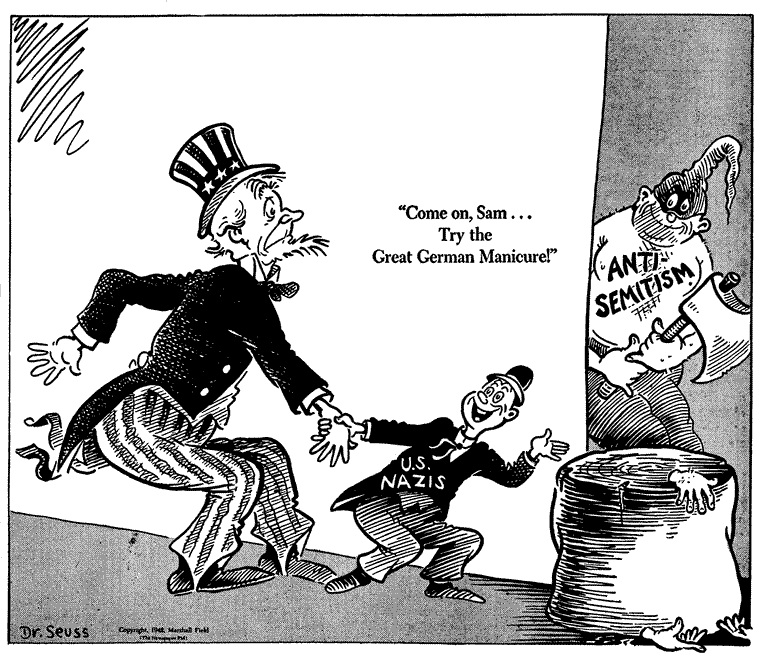
…Cartoons
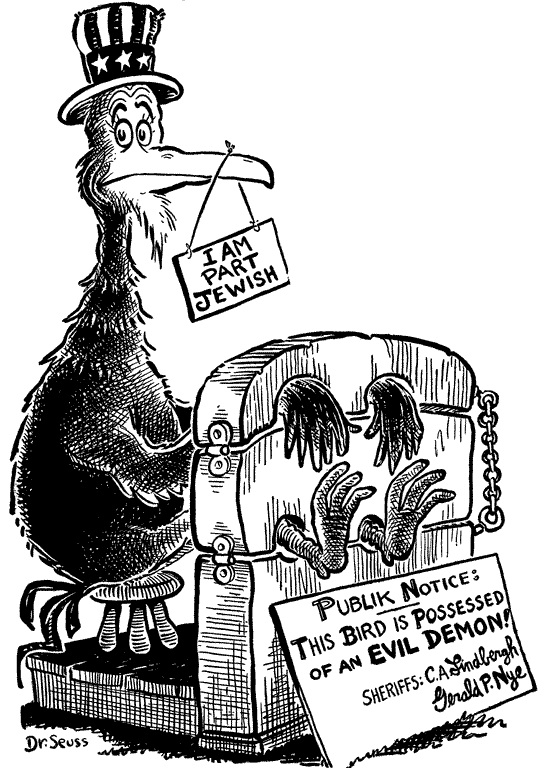
In the late 1930s, Dr. Seuss often used his early cartoons to convey political messages.
Was the Holocaust Unique?
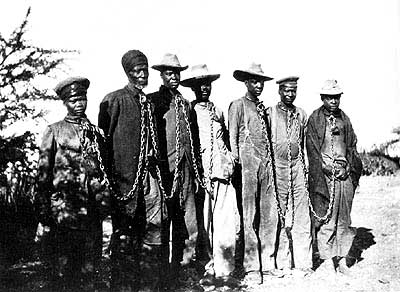
In January 1904, in German Southwest Africa (now Namibia), the Herero and Nama people rebelled against German colonial rule. German forces drove the Herero and Nama into the desert, where many died. Altogether between 24,000 and 100,000 Herero and 10,000 Nama died. Survivors were imprisoned in concentration camps, where the majority died of disease and abuse.
In 1915, in the midst of World War I, between 600,000 and 1.5 million Armenians in the Ottoman Empire were killed, ninety percent of all Ottoman Armenians. Convinced that Armenians were a dangerous 5th column allied to Russia, Armenian soldiers were disarmed and killed. Armenian intellectuals and politicians in Istanbul, Turkey, were murdered. Of the survivors, hundreds of thousands of Armenian women and children were forced to convert to Islam.
Is the Holocaust one in a series of genocides to be found in virtually every historical epoch, or is there something unique about the systematic murder of European Jews?
Those who argue for the Holocaust’s uniqueness emphasize six distinctive features:
- Its racial character: Jews were killed precisely because they were Jewish. Anti-Semitism, not fear of a 5th column or of resistance, drove the Holocaust. A Jew was a Jew because of their “blood”—even those who had a single Jewish ancestor and did not practice Judaism were marked for extermination.
- The immensity of its scale: Six million Jews, two-thirds of all the Jews in Europe, were killed during World War II.
- Its industrial and bureaucratic character: To kill Jews on such a scale, Nazi Germany deployed the techniques of a modern industrial society, deploying its rail system and establishing gas chambers to facilitate the killing of Jews.
- Its intentionality: Killing Jews was explicit government policy. The government’s aim was to eliminate an entire people, regardless of individuals’ age, sex, location, or profession. The extermination of Jews was not motivated by economics or even politics. It was an end in itself.
- The degree of popular support: The Holocaust would have been impossible without the support of Germany’s professional classes, doctors, lawyers, engineers, and bureaucrats.
- Its exterminationist goal: Hitler’s Germany sought to kill Jews everywhere, even if that conflicted with its other war aims. Indeed, killing Jews was the government’s top priority. Toward the war’s end, Germany devoted scarce manpower and resources to the end of killing the relatively small number of Jews in Finland, Romania, and the island of Rhodes off of Greece.
Mass killings have occurred in every epoch in human history on every continent. There is no need for a competition to determine which group of people has suffered most. Every historical event is, in a sense, unique.
World War II
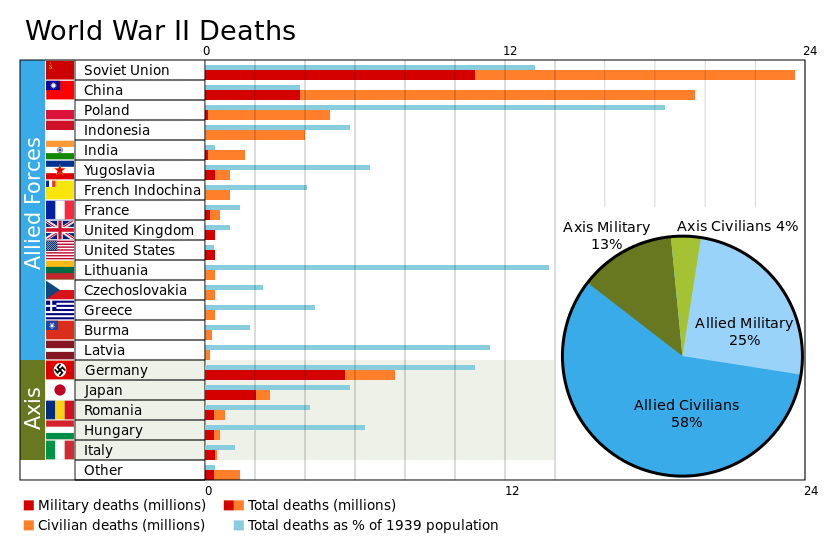
No war in history killed more people or destroyed more property than World War II. Seventeen million combatants—and an unknown number of civilians—lost their lives in the conflict. Altogether, seventy million people served in the armed forces during the war. Of these, some 7.5 million Soviet troops died in World War II, along with 3.5 million Germans, 1.25 million Japanese, and 400,000 Americans. Civilian deaths were even higher. At least nineteen million Soviet civilians, ten million Chinese, and six million European Jews lost their lives during the war.
More than any previous war in history, World War II was a total war. Some seventy nations took part in the war, and fighting took place on the continents of Europe, Asia, and Africa, and in the seas surrounding Australia. Entire societies participated in the war either as soldiers or war workers, while others were persecuted as victims of occupation, bombing, and mass murder. In the United States the war had vast repercussions: it ended Depression joblessness, brought millions of married women into the workforce, initiated sweeping changes in the lives of the nation’s minority groups, and dramatically expanded government’s presence in American life. In addition, World War II marked the beginning of the nuclear age.