Peace
Peace
As Americans waited impatiently for a final peace settlement, they grew increasingly divided over their war aims. Ultra-expansionists, who drew support from Northeastern cities as well as from the West, wanted the United States to annex all of Mexico. Many Southerners, led by John C. Calhoun, called for a unilateral withdrawal to the Rio Grande. They opposed annexation of any of Mexico below the Rio Grande because they did not want to extend American citizenship to Mexicans. Most Democratic Party leaders, however, wanted to annex at least the one-third of Mexico south and west of the Rio Grande.
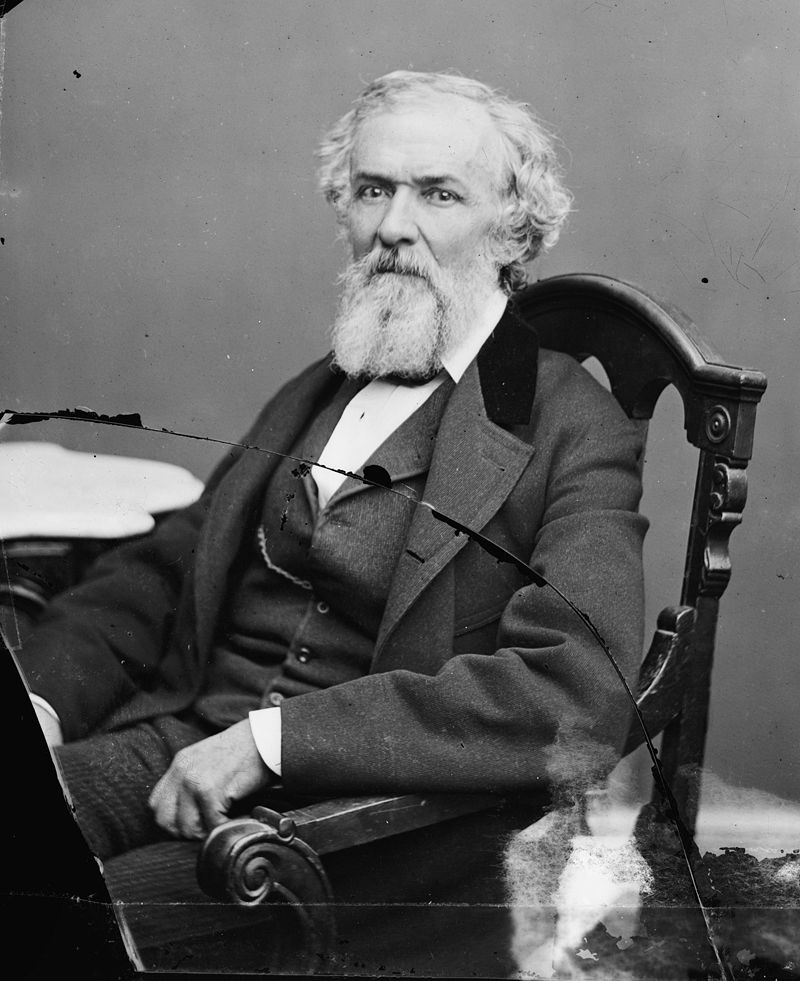
Then suddenly on February 22, 1848, word reached Washington that a peace treaty had been signed. Earlier in February, Nicholas Trist, a Spanish-speaking State Department official, signed the Treaty of Guadalupe Hidalgo, ending the Mexican War. Trist had actually been ordered home two months earlier by Polk, but he had continued negotiating anyway, fearing that his recall would be “deadly to the cause of peace.”
According to the treaty, Mexico ceded to the United States only those areas that Polk had originally sought to purchase. Mexico ceded California, Nevada, Utah, New Mexico, and parts of Arizona, Colorado, Kansas, and Wyoming to the United States for $15 million and the assumption of $3.25 million in debts owed to Americans by Mexico. The treaty also settled the Texas border dispute in favor of the United States, placing the Texas-Mexico boundary at the Rio Grande River.
Ultra-expansionists called on Polk to reject the treaty. William Tecumseh Sherman called the treaty “just such a one as Mexico might have imposed on us had she been the conqueror.” But a war-weary public wanted peace. Polk quickly submitted the treaty to the Senate, which ratified it overwhelmingly. The war was over.
The War’s Significance
The story of America’s conflict with Mexico tends to be overshadowed by the story of the Civil War, which began only a decade and a half later. In fact, the conflict had far-reaching consequences for the nation’s future. It increased the nation’s size by a third, but it also created deep political divisions that threatened the country’s future.
The most significant result of the Mexican War was to reignite the question of slavery in the western territories. Even before the war had begun, philosopher Ralph Waldo Emerson had predicted that the United States would “conquer Mexico, but it will be as the man who swallows the arsenic which will bring him down in turn. Mexico will poison us.” The war convinced a growing number of Northerners that Southern slaveowners had precipitated the war in order to open new lands to slavery and acquire new slave states.
…Art: Remembering the Mexican War
This question is not graded and you do not need to answer it.
Overshadowed by the Civil War, the Mexican War was nonetheless one of the pivotal events in U.S. history, shaping the nation’s geography and helping to trigger the Civil War itself. The war’s significance will likely grow in importance as the nation’s Mexican American population grows.
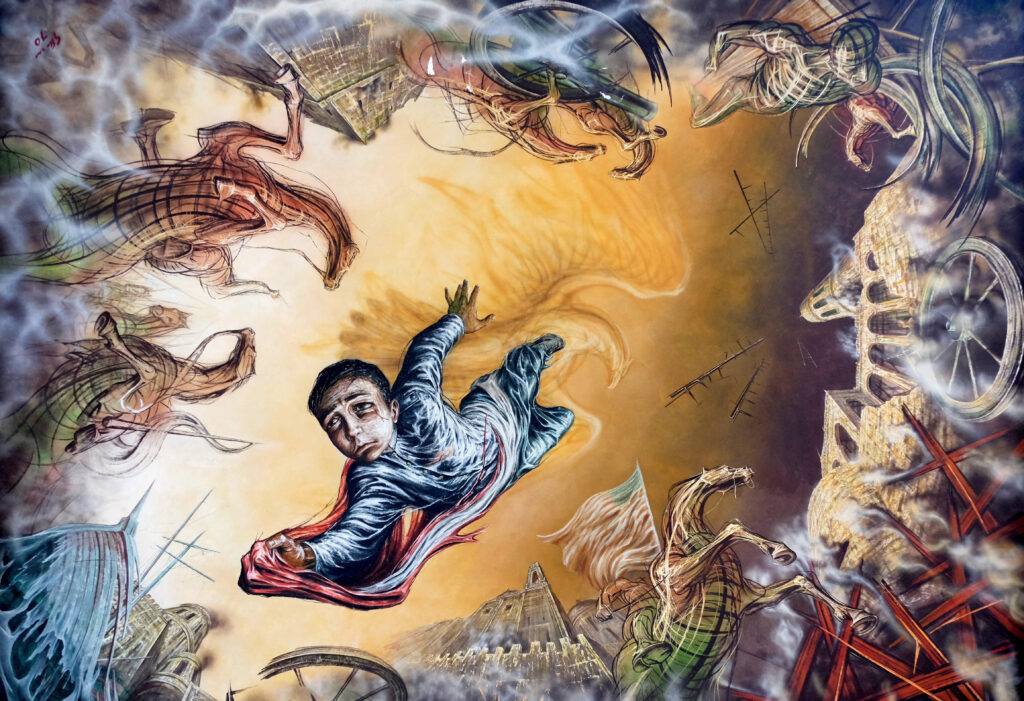
The opening words of the Marine Corps Hymn — “From the Halls of Montezuma” – commemorate a key battle in the Mexican War. In order to enter Mexico City, 120 Marines and soldiers first had to storm a heavily reinforced 200 foot-high hill, surmount a 12-foot wall, and capture Chapultepec castle, a military academy that was once a palace. During the battle, 90 percent of the Marine officers and noncommissioned officers who fought were killed. Among the thousand Mexican defenders were six young cadets, thirteen to nineteen, who died in the battle and who were remembered as “Los Niños Héroes,” the boy heroes. One, Juan Escutia, reportedly wrapped himself in the Mexican flag and threw himself from the ramparts rather than be captured. Every September 13th, the Mexican president, representatives of the Mexican legislative and judiciary, and current Colegio Miltary cadets lay wreaths to honor the Niños Héroes.
Look at the following image.